
Why heat pipe waste heat boilers recover low-temperature exhaust heat that conventional boilers miss, and what data to collect before requesting a proposal.
Exhaust streams that carry sensible heat are released from many industrial processes every day, and venting them directly throws that heat away. Heat pipe waste heat boiler technology recovers the sensible heat of low-temperature exhaust and returns it as low-pressure saturated steam for production and domestic use, cutting fuel consumption and reducing the pollutant load in flue gas at the same time.
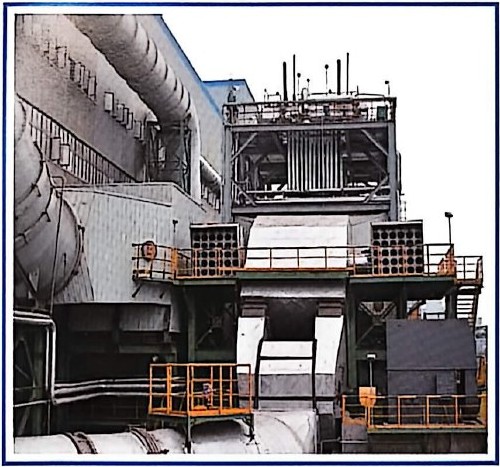
Why heat pipes behave differently from ordinary boiler tubes
A heat pipe is a sealed element fixed on the inner drum wall and hanging freely in the flue duct. That single arrangement produces several practical consequences:
- The two media never mix. Heat crosses the heat pipe wall twice between the flue side and the steam side, so a leak on one side cannot contaminate the other.
- Failures do not stop the plant. One or even several heat pipes can fail without interrupting continuous, stable operation of the unit.
- Resistance stays low. Both media flow outside the heat pipe surfaces in a single pass, keeping the medium resistance small.
- The bundles clean themselves. Because the media flow across the pipe surfaces, the flowing gas scours them, so build-up and clogging do not accumulate.
- Thermal expansion is free. The elements hang unrestrained, so expansion and contraction cause no stress damage and the service life is long.
Low-temperature heat is recoverable because the temperature difference is small
The minimum temperature difference required for heat transfer across a heat pipe is small, which is precisely what makes recovering low-temperature waste heat economical. Streams that a conventional boiler cannot exploit still carry usable enthalpy for a heat pipe unit.
Acid dew point corrosion can be designed out
The heat exchange area between the cold and hot media is adjustable according to the specific operating conditions of the equipment. Adjusting it changes the surface temperature distribution of the elements, which avoids low-temperature acid dew point corrosion on the gas side.
Retrofit or new build
The equipment is compact and occupies little floor space. It can be matched to a new project or installed simply as a retrofit on an existing plant, which matters when the exhaust system itself cannot be rebuilt.
Data to collect before requesting a proposal
- Exhaust gas flow, temperature and composition.
- The steam pressure and quantity the process can consume.
- Space available at the intended installation point, and whether the duct can be interrupted for the retrofit.
Frequently asked questions
What does the recovered heat become?
Low-pressure saturated steam recovered from the sensible heat of the exhaust, used for production and domestic purposes.
What happens when heat pipes wear out?
The media never mix, and single or multiple tube failures do not affect continuous, stable operation.
Why does it resist acid dew point corrosion?
The adjustable cold/hot exchange area shifts element surface temperatures away from the acid dew point range under the given operating conditions.
With the exhaust data above, a supplier can estimate the recoverable heat and the steam output of a heat pipe waste heat boiler for your specific stream. ZHONGYUE PEC builds heat pipe waste heat recovery systems for both new plants and retrofits.