A four-step selection guide for stainless steel chemical reactors: choosing the heating method, matching size to batch, specifying agitation and sealing, and checking manufacturer qualifications.
Choosing a reactor for a chemical process comes down to four decisions: how the vessel is heated, what pressure class it belongs to, how the contents are agitated, and which size fits the batch. This guide works through each decision using the standard reactor range manufactured by ZHONGYUE PEC.
1. Pick the heating method first
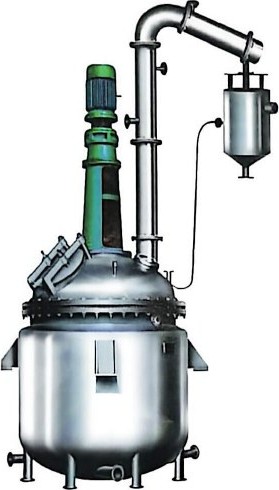
All reactors in the range are built from acid-resistant stainless steel plate in the parts that touch the product, and the heating jacket can be fed three ways: electric heating rods, steam, or thermal oil circulation. The right choice follows the utilities you already have on site:
- Electric heating suits plants without a boiler or steam line. Electric rods warm the thermal oil inside the jacket, and a temperature controller switches the rods on and off to hold the set point automatically.
- Steam or thermal oil suits plants that already generate them, and keeps the reactor itself simple.
If heat transfer is the bottleneck of your process rather than the utility supply, the external coil reactor changes the comparison. Its spiral half-pipe jacket reduces the shell and lower head wall thickness by 37.5% and 50% against an equivalent conventional jacket, lowers the air-gap resistance of an ordinary jacket, and runs at a jacket-to-coil volume ratio of 8:1, so less heating medium circulates. The high medium velocity also prevents scale on the inner jacket surface, and the same vessel handles cooling-down duty.
2. Match the size to the batch
Standard electric heating reactors run from 30 L to 10,000 L. Key reference rows:
| Size | Electric power | Inner vessel (Φ mm) | Jacket (Φ mm) | Motor power |
|---|---|---|---|---|
| 100 L | 6×2 kW | 500 | 700 | 1.1 kW |
| 500 L | 9×4 kW | 900 | 1100 | 2.2 kW |
| 1000 L | 12×4 kW | 1200 | 1400 | 4.0 kW |
| 3000 L | 15×4 kW | 1600 | 1800 | 7.5 kW |
| 5000 L | 18×5 kW | 1800 | 2000 | 15 kW |
| 10000 L | — | 2400 | 2600 | 18.5 kW |
External coil reactors step in where larger heated volumes are needed, from 500 L up to 20,000 L nominal capacity with shell diameters of 900 to 2,400 mm and external coil areas from 2.438 up to 101.679 m².
3. Specify agitation and sealing for the process
Reactions such as sulfurization, nitration, hydrogenation, alkylation, polymerization and condensation only proceed well when the reacting materials are thoroughly mixed, and steps like heating, cooling, liquid-liquid extraction and gas absorption all depend on the agitation system. Available agitator designs include paddle, turbine, push-type, anchor, frame, ribbon and saw-tooth disc. Shaft sealing is either a packing seal or a mechanical seal, and the number and size of openings are arranged to your process.
4. Check the manufacturing qualifications
For pressurized work, the manufacturer’s credentials matter as much as the vessel. ZHONGYUE PEC holds the PRC Special Equipment Manufacturing License for A2 pressure vessels and ASME U Stamp authorization at the company level; the exact code coverage for a specific vessel is confirmed at quotation.
What to prepare before you inquire
- Batch volume and the process step the reactor will serve.
- Process temperature range and heating medium available on site.
- Agitation and sealing requirements.
- Any need for cooling-down operation in the same vessel.
Frequently asked questions
Does an electrically heated reactor need a boiler?
No. Heating is fully electric through rods in a thermal-oil jacket, with automatic temperature control.
Can one reactor heat and cool?
The external coil reactor is suitable for cooling-down processes as well as heating.
Which is better, a plain jacket or an external coil?
A plain jacket is the straightforward choice for moderate duties. The external coil wins when you need faster heat transfer, thinner vessel walls and lower energy carry-over, because of its 37.5%/50% wall reduction and 8:1 jacket-to-coil volume ratio.
Once these four decisions are written down, a supplier can turn them into a concrete proposal. ZHONGYUE PEC manufactures both conventional and external coil reactors and can size a unit against your batch data.