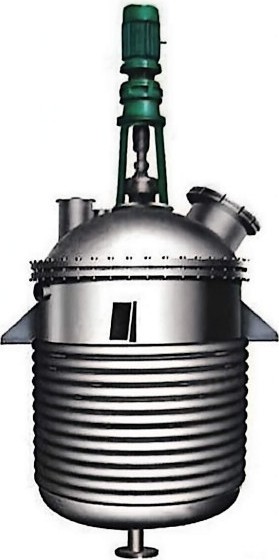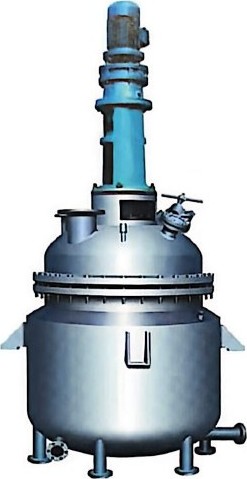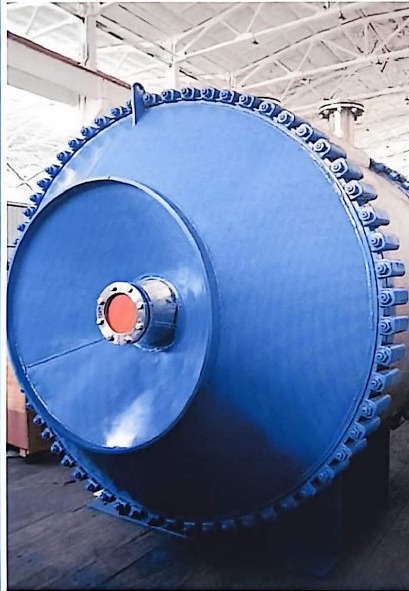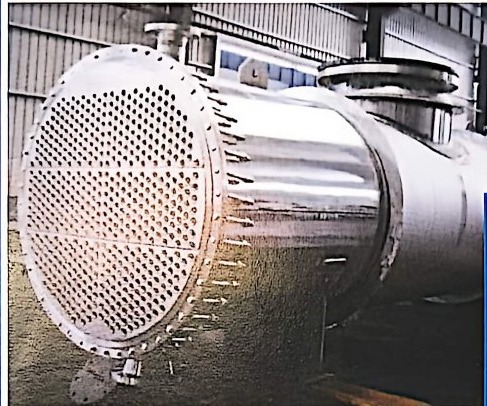
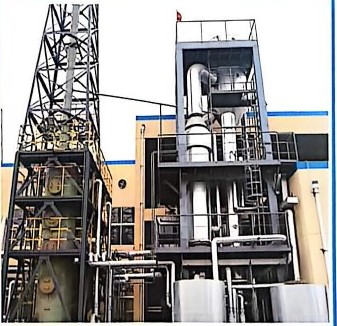
MVR Evaporator
Mechanical vapor recompression evaporation: only about 10% supplemental steam, small footprint, high automation, with rising/falling film duty for heat-sensitive materials.
Specifications
| Supplemental steam demand | About 10% of evaporation capacity |
|---|---|
| Process types | MVR / rising film / falling film |
| Residence time (film type) | Seconds to tens of seconds |
| Operation | Automated, single-pass |
Product Detail
MVR Evaporator: Recompressing Vapor Instead of Buying Steam
MVR (mechanical vapor recompression) is a new-generation energy-saving evaporation process. The low-temperature secondary vapor produced in the evaporator is compressed by a vapor compressor, which raises its temperature and pressure and increases its enthalpy. The compressed vapor then enters the evaporator’s heat exchanger and condenses there, fully using the latent heat of the steam.
As a result, the first effect of the evaporation train no longer needs a large quantity of fresh steam as its main heat source. Only about 10% of the evaporation capacity is needed as supplemental steam, covering the unavoidable heat exchange losses and system heat dissipation.
Operating benefits
- Low energy consumption and low running cost.
- Small footprint.
- Fewer utility installations, lower total project investment.
- Stable operation with a high degree of automation.
- Short product residence time thanks to single-pass operation.
- Simple, practical process.
Heat-sensitive duty: rising / falling film evaporation
In the rising or falling film evaporator, the feed enters continuously at the bottom or top and rises or falls a short distance. After preheating the liquid begins to boil, bubbles form a vapor-liquid mixture, and the secondary vapor carries droplets upward or downward through the center of the tubes at very high velocity while the un-evaporated liquid is stretched into a film along the tube wall. Residence time is only a few seconds to a few tens of seconds and the holdup volume is small, which suits the concentration of heat-sensitive materials.
What the system includes
A complete train combines feed preheating, film evaporation, vapor-liquid separation, vapor recompression and condensate handling, arranged as a single skid or as field-erected equipment depending on capacity.
Frequently asked questions
How much steam does an MVR system consume?
About 10% of the evaporation capacity, used as supplemental steam to cover heat exchange losses and system heat dissipation.
Is it suitable for heat-sensitive products?
Yes. The rising / falling film arrangement keeps residence time to seconds and the holdup volume small.
What information should I send for a proposal?
The feed composition and flow, the evaporation capacity required, the feed and target concentrations, and the utilities available at your site.
Request MVR evaporator details
Include the feed type, evaporation capacity, feed and target concentrations, and available utilities so we can review your evaporation duty.
Request product details