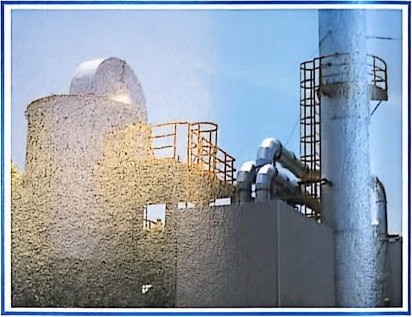
Zeolite Rotor Concentration + RTO System
RTO systems for low-concentration, high-volume VOC: zeolite rotor concentration of 10–15×, oxidation at 760°C into CO2 and H2O, efficiency 97–99.5% by configuration.
Specifications
| Purification efficiency | 97–99% (two/three-chamber); up to 99.5% (rotary) |
|---|---|
| Concentration ratio | 10–15× |
| Oxidation temperature | 760°C |
| Oxidation products | CO2 and H2O |
| Configurations | Two-chamber / three-chamber / rotary |
Product Detail
Zeolite Rotor Concentration + RTO for Low-Concentration, High-Volume VOC
The regenerative thermal oxidizer (RTO) is mainly applied to organic waste gas (VOC) with low-to-medium concentration and large air volume. Common RTO forms are the two-chamber and three-chamber structures, with purification efficiency of 97–99%; the rotary RTO reaches 99.5%.
System composition
The zeolite molecular sieve adsorption + RTO system consists of a waste gas pre-treatment section, the zeolite molecular sieve adsorption section, a desorption section, a drying and cooling section, the RTO post-treatment unit and an automatic control system.
Working principle
Low-concentration, high-volume organic waste gas is efficiently concentrated 10–15 times by the zeolite rotor. The concentrated stream is then heated to 760°C, at which the VOC in the waste gas is oxidized and decomposed into harmless CO₂ and H₂O. The heat of the high-temperature gas is stored in the ceramic media and used to preheat the incoming organic waste gas, saving the fuel that preheating would otherwise consume.
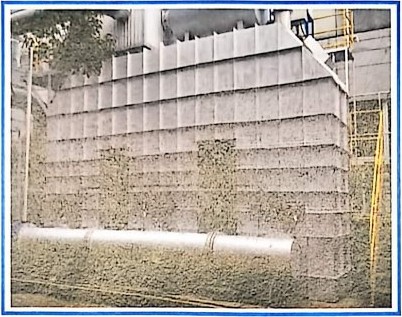
Configurations
- Three-chamber RTO: the common multi-chamber form, purification efficiency 97–99%.
- Rotary RTO: single-vessel rotary valve design, purification efficiency up to 99.5%.
Frequently asked questions
What purification efficiency can I expect?
Two-chamber and three-chamber RTOs reach 97–99%; the rotary RTO reaches up to 99.5%.
What waste gas is it for?
Organic waste gas (VOC) at low-to-medium concentration and large air volume, concentrated 10–15 times before oxidation at 760°C.
What are the oxidation products?
The VOC is oxidized into CO₂ and H₂O.
What should I send for a proposal?
The exhaust air volume, VOC concentration and composition, and your emission target, so the chamber or rotary configuration can be matched to your stream.
Request RTO system details
Include the exhaust air volume, VOC concentration and composition, and your required removal efficiency to help us prepare a configuration response.
Request product details